Solution topic
Lotion and Liquid Bottling Line: Split by Viscosity, Foaming, Corrosiveness and Cleaning
Select feeding, filling valves and anti-drip nozzles by viscosity, foaming, corrosiveness, temperature and cleaning, then add capping, optional induction sealing, labelling and ins
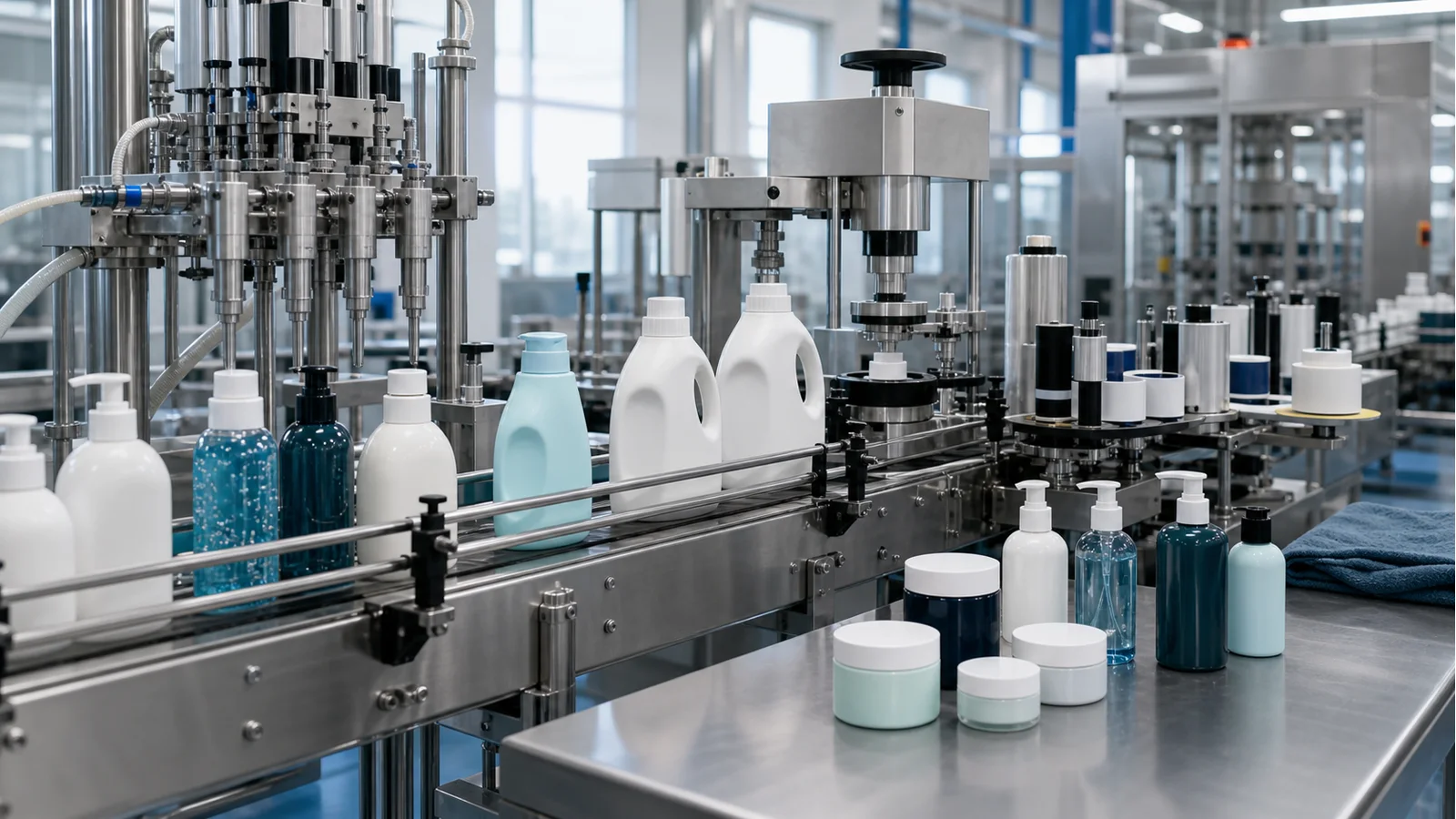
- Product condition determines feeding, pump, valve and drip control before capping, optional induction inner sealing, labelling and level or weight checks.
Solution summary prepared for you
- Daily chemical lotions and ordinary liquids are first divided by viscosity, foam, stringing, and contact conditions, then the filling main machine is confirmed with formal actual materials.
- Rotary continuous filling machines are used for continuous solutions with stable rigid bottles; container clamping, cleaning changeover, and line integration scope all require project evaluation.
- After filling, online liquid level inspection and rejection machines and automatic screw capping machines can be configured according to sample bottles; labeling and collaborative batch coding are arranged along a stable conveying posture.
Route comparison
- For bottled projects comparing ordinary liquid and lotion main machines according to viscosity, foam, stringing and contact conditions.
- Liquid filling machines and daily chemical lotion filling machines can use the same batch of bottle samples to observe feeding, drop point and filling finish separately.
- The material name cannot explain the real flow; the pump path, filling nozzle, cleaning and contact parts all need actual material verification.
- When the material and bottle type are not yet stable, complete single-machine trial filling first and do not fix continuous stations or changeover structures.
- Liquid filling machines are for ordinary liquids whose actual performance matches, while daily chemical lotion filling machines are configured according to lotion samples and project requirements.
- For projects with main rigid bottles, flowable materials and stable production schedules that need to evaluate multi-station rotary continuous filling.
- Rotary continuous filling machines can observe container spacing, clamping, filling at each station and bottle discharge posture during continuous trials.
- Sample adaptation, filling valves, changeover cleaning, optional modules and on-site interfaces must all be confirmed item by item.
- When bottles cannot be stably clamped or the material is still under development, first keep a linear or single-machine trial filling route.
- Rotary continuous filling machines are evaluated according to formal bottle samples, materials and project layout, and the operating range is confirmed by online testing.
- For filling projects where material flow changes with production temperature and warm-state feeding and cleaning requirements are already defined.
- Insulated hoppers and jacketed tanks can stabilize the agreed feeding state before the main filling machine, making it easy to trial the material under the same conditions.
- Temperature, residence, stirring, discharge and cleaning must all be given by the material process and cannot be copied from general conditions.
- When room-temperature sample feeding is stable or the material process does not allow warm-state treatment, do not add insulation modules.
- First observe feeding with room-temperature actual material, then configure insulated hoppers and jacketed tanks according to the test results and recheck cleaning.
- For the downstream section of bottled products that need level judgment, automatic closing, bottle body labels and variable batch numbers after filling.
- Level, screw capping, labeling and batch number can each establish samples, and the bottle body posture is uniformly checked along the food-grade conveying line.
- Foam, bottle color, cap type, label surface and character area all require formal samples, and several stations cannot share one judgment.
- When the liquid level cannot be stably identified by the selected method or the packaging has no corresponding marking requirement, cancel the corresponding station.
- The online liquid level inspection and rejection machine is evaluated with abnormal sample bottles, the automatic screw capping machine and round/square bottle labeling machine are tested with complete packaging, and the batch number is...
Associated Equipment / Consumables
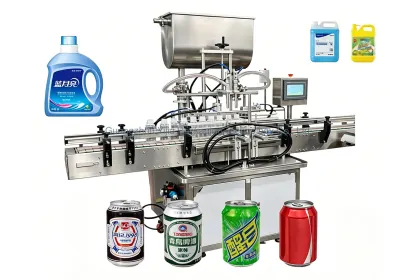 Liquid Filling Machine
Material and contact condition verification; Flow, foam, stringing, and contact conditions together determine the supply and filling actions; first use actual materials to establish cleaning an...
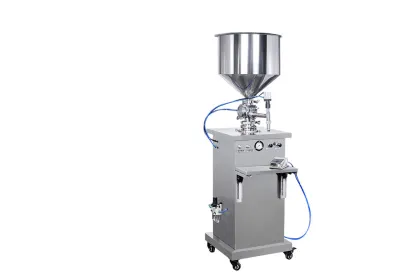 Daily Chemical Lotion Filling Machine
Material and contact condition verification; Flow, foam, stringing, and contact conditions together determine the supply and filling actions; first use actual materials to establ...
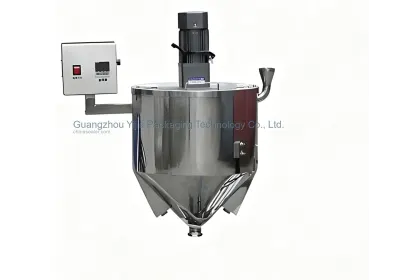 Heated Hopper and Jacketed Feed Tank
Material and contact condition verification; Flow, foam, stringing, and contact conditions together determine the supply and filling actions; first use actual materials to establi...
Core process
Sample details
This information is used to select supply and filling actions and to establish observation items for foaming, dripping, and cleaning.
Please provide representative materials and videos, indicating production temperature, viscosity, foam, stringing, contact conditions, and cleaning methods for material changeover.The cap combination affects the filling nozzle drop point, conveying support, automatic screw capping, and the subsequent visible liquid level area.
Please prepare the main bottle, ordinary cap or pump head cap, and indicate the bottle mouth, body, bottom, and finished state after closing.Fill volume and changeover are used to compare the actual boundaries of daily chemical lotion filling machines, liquid filling machines, and continuous rotary solutions.
Please specify the bottle type, fill volume range, changeover sequence, and acceptable finished product judgment method for each material.Single machine, linear conveying, or rotary continuous layout should be comprehensively evaluated around the main bottle type, cleaning time, and station integration.
Please provide shift rhythm, manual bottle feeding, site dimensions, conveying direction, and height and control interfaces of upstream and downstream equipment.Liquid level, labeling, and coding are verified separately to avoid labels blocking the inspection area or characters falling on unstable surfaces.
Please prepare sample bottles with different liquid levels, foam states, label drafts, batch code content, rejection destination, and reading requirements.Common selection mistakes
Flow, foam, and stringing behave differently; supply, filling nozzles, and cleaning actions should also be confirmed with respective sample materials.
Pump head direction, closing action, and bottle clamping cannot be inferred from ordinary threaded caps; submit a complete set of caps for screw capping samples.
Material contact requirements involve piping, seals, and cleaning methods; provide the corresponding conditions before configuring the main machine.
When bottle type, cap type, fill volume, and cleaning frequency change frequently, the clamping and changeover of rotary continuous filling lack a stable basis.
Liquid level judgment is also affected by bottle color, foam, and label occlusion; only normal finished products cannot form a complete test.
View detailed technical notes
For daily chemical filling, look at the material first, not the capacity
Water-based liquids, lotions and foaming liquids with the same fill volume may require different feeding and finishing. Viscosity, foam, stringing and contact conditions should first be explained by actual material samples.
Foam and bottle body together determine the level route
Foam changes the filling finish and the visible liquid level, while bottle color, wall thickness and label position change the inspection conditions. Filling and inspection must share the same batch of sample bottles.
Liquid filling machines are used for materials whose flow behavior matches the ordinary liquid route, while daily chemical lotion filling machines are built around the viscosity, foam and stringing tests of the lotion. Both types of main machines must be checked with formal actual materials and bottle samples for feeding, drop point, filling finish, contact parts and cleaning, and must not be preset from shampoo or skin care product names.
Rotary continuous filling machines are for rigid bottles that can be stably conveyed and clamped. Bottle mouth, bottle bottom, material, fill volume, hygienic cleaning and front/rear interfaces are confirmed item by item during project evaluation. The operating range is not fixed until continuous samples are formed. Bottle unscrambling, cap feeding, screw capping and sealing are optional connections and are not written as fixed components of the filling main machine.
Insulated hoppers and jacketed tanks are used only when the material process requires warm-state feeding. Formal tests compare the flow, foam, stringing and residue of the material at the agreed temperature, while also checking residence, stirring, discharge and cleaning. When room-temperature feeding is already stable, do not add unnecessary temperature control components.
Cap type determines the closing test, not the filling machine
Ordinary screw caps and pump head caps use different cap feeding and clamping methods. An automatic screw capping machine must use the complete cap assembly to observe closing and changeover.
Level inspection uses real foaming sample bottles
The online liquid level inspection and rejection machine is evaluated according to normal and abnormal levels, foam, bottle color and label status. The inspection principle and rejection action are determined by project tests.
Labels and batch numbers are arranged along a stable bottle posture
The round/square bottle labeling machine uses formal label rolls and bottle surface trial application, the collaborative date batch coding machine then trial prints according to the character area, and the food-grade conveying line coordinates bottle spacing.
The same batch of samples runs through from filling to the downstream section
Materials, bottles, caps, level samples and label layouts use the same specification number. After changing material or bottle, recheck along the order of feeding, filling, closing and marking.
Common questions
How are daily chemical lotions and ordinary liquids separated between different equipment?
First compare viscosity, foam, stringing, and contact conditions under production conditions, then run trials separately on a daily chemical lotion filling machine and a liquid filling machine.
Can shampoo go through the ordinary liquid route?
Actual shampoo is needed to observe flow, foam, and stringing. If the material behaves consistently with the ordinary liquid route, adopt it; otherwise, switch to the lotion direction for evaluation.
Can the direction be divided without formal samples?
You can first submit a material video, cap photos, and fill volume specifications; filling components, cleaning methods, and operating range are still confirmed with formal actual materials and bottles.
When is insulated supply evaluated?
When the material shows obvious flow differences after production temperature changes, and temperature-conditioned supply meets the process, then use sample materials to evaluate the insulated hopper and jacketed tank.
Can labeling and batch coding stations be added later?
Bottle spacing, conveying height, trigger signals, and installation space can be reserved; when formally added, the label layout and finished bottles must be used for joint commissioning.
Why does liquid level inspection need foam samples?
Foam, bottle color, wall thickness, and label position change the visible liquid level characteristics; the online liquid level inspection and rejection machine needs qualified and defective sample bottles to determine the method.